You Give Blog a Bad Name

Like any ordinary Sunday in the social media world, yesterday’s Twitter was abuzz with a lot of different things from the lamest what-I-am-eating-right-now tweet to the more serious stuffs. One that caught my attention though is the discussion about a big bad blogger. Tweeps from all corners of the Philippines fired their 140-character long views on this intriguing issue and it went on from morning until night.

So who is this big bad blogger, anyway? What has her done to deserve a column in the Inquirer’s Sunday issue? As a blogger myself, I tried to see the news today while everyone on Twitter seems to have gotten their cool back—and have found other interesting topics worth their 140-character opinions.

After reading ”Please Don’t Give Blogging A Bad Name Name,” I was in disbelief. The article is absurd if not a total waste and it does not even qualify as good satire. Unbelievably, the column written by a seasoned writer doesn’t even have links to the review (blog) among other facts that could establish that such event has actually taken place. Had I read this somewhere in a tabloid, I would have understood. Had I read this in a book review, I would have thought that this is actually a part of a fictional story. But then again, it’s not.

At this point I also wonder what was going on inside the mind of the writer as she types away the first few lines of her article. No catchy topics? Running on a deadline? Was it about the amount of money that a fictitious PR firm has been trying to extort from the equally fictitious restaurateur? Or was she thinking that bloggers are all alike and that a bad food (no pun intended) review will actually taint all bloggers in the world? Your guess is just as good as mine. If this article is a prelude to more exposes then fine.

Until then, in my opinion, this article is anything but worthwhile. Whatever the reasons are for the article is unknown. However, one thing is certain: the article “Please Don’t Give Blogging a Bad Name” has in fact given blogging a good name. It is through this that those unfamiliar with it will read and soonr realize that bloggers aren’t slave to anyone. Some bloggers may be bad, but definitely it shows that bloggers (most) are free. Bloggers will blog anything under the sun, with or without money, and whether we like it or not. That’s blogging madam, just in case you forgot.

***

Mood: 3/10 Honks! (Anxiety sucks

Why I Now Care More About Plagiarism

What a surprising way to welcome myself back to the online world after my self-imposed (trying to still be a good Catholic somehow) 3-day internet hiatus. As I slowly back-read tweets I began to see the a pattern of striking news from several tweeps I follow—tycoon Manuel V. Pangilinan has offered to retire as ADMU’s chairman of the board of trustees after someone exposed his recent speech to the school’s graduates as having been copied from celebrities like Oprah Winfrey, Conan O’Brien and J. K. Rowling. In short MVP was guilty of plagiarism. So what really is plagiarism?

Basically, plagiarism is a word commonly defined as copying someone else’s literary work and trying to pass it off as one’s own. Literary works among other things like movies, technical drawings and music become copyrighted as soon as its original author makes it; which means that the author assumes immediate ownership and thus when his writings (or any other work) are plagiarized by another person, makes the act alone technically, a form of stealing. The topic of plagiarism has been actually a topic of discussion and argument among authors and scholars for a very long time, and as a matter of fact, according to Answers.com plagiarism dates back from the 17th century. The site’s definition states that the word plagiarism has its roots from the Greek word plagion which means to ‘kidnap.’ Furthermore, Plagiarism.org has a list of things that constitutes plagiarism. Here are some of them: 

Changing words but copying the sentence structure of a source without giving credit.” This may occur when someone paraphrases, or reword, a thought but still ending up with almost the same as what the original document contains. This is either a product of poor reconstruction OR a purposeful intent to deceive its readers.

Copying so many words or ideas from a source that it makes up the majority of your work, whether you give credit or not.” This instance would normally arise if one comes to a point when he wrongly decides to get as much facts as he can in order to support an argument, an analysis or a conclusion.

Failing to put a quotation in quotation marks.” Many of today’s technology applications probably make everyone guilty of this no matter how well the intent. Case in point, one can easily find in social networking sites, such as Facebook, sharing of inspiring stories or quotes which without the mere quotation marks (and worse, the quote’s author) may make someone who is not aware of the quote think that it actually is his/her friend’s own thought. There’s also Twitter (and SMS) where limits in the allowable characters makes it easy for one to plagiarize.

So is plagiarism bad? Yes. But like any other wrongdoing, it would be ethical to listen and know why someone did it in the first place. Again, Plagiarism.org sums up two general reasons why the act.

Intentional

According to plagiarism.org, those considered to be intentional are reasons like ”everyone’s doing it”—so why can’t I? ”But there words are better”—and why the need to waste time thinking about when in fact there’s already one that has been done by one who’s an expert. And there’s of course, the need to ”make the grade” which may be arise from cramming after realizing that schedules cannot be met. 

Unintentional

There are of course who despite their best effort to avoid plagiarism still fall to the trap of making the mistake of plagiarizing someone else’s work.

And also listed on Plagiarism.org are the following reasons students plagiarize:

There is “citation confusion.” According to this site, this is perhaps the most common reason students are caught plagiarizing. The question now is, “How should one make a citation?” Wikipedia.org has the answer. It says, ”While you should try to write citations correctly, what matters is that you add your source—provide enough information to identify the source, and others will improve the formatting if needed.” This simply implies that there is really no rule on how to cite a source as long as what is written to acknowledge it is correct and updated. Such rule may prove useful if a document or presentation will be for an informal setting (or if one is just preparing a draft) or if one is citing an online source as copying exactly the URL (or link) may be enough. Of course such isn’t always the case. Wikipedia.org explains further, ”Each article should use the same citation method throughout. If an article already has citations, adopt the method in use or seek consensus before changing it.” These statements refer to formal research, like in the Academe, where appropriate formats of citation are to be observed. Examples of recognized formats are the APA style, MLA style and The Chicago Manual of Style. For students and some individuals picking the choice of which citation format should be followed is just as confusing as the research itself. But at the end of the day, what counts the most is whether he recognized and acknowledged where he got his reference and giving credit to whom credit is due is very important to avoid or repeat such mistake.

Belief that “facts shouldn’t be quoted.” The availability of the internet and the thinking that what is being presented is common knowledge is one of the reasons  many think that it is not necessary to cite what they have extracted. In order to avoid plagiarizing, the website suggests a short yet foolproof tip, ”when in doubt, cite sources.”

The existence of “cultural relativism.” It is quite noteworthy that not every culture actually recognizes the need to acknowledge literary works. It is not therefore surprising if expat students who come from different cultural backgrounds commit plagiarism as their awareness to giving credit to literary works may be different compared with the other local students.

Interestingly another site, Irving Hexham’s Homepage discusses specifically about Academic Plagiarism and defines it as ”the deliberate attempt to deceive the reader through the appropriation and representation as one’s own the work and words of others. Academic plagiarism occurs when a writer repeatedly uses more than four words from a printed source without the use of quotation marks and a precise reference to the original source in a work presented as the author’s own research and scholarship. Continuous paraphrasing without serious interaction with another person’s views, by way or argument or the addition of new material and insights is a form of plagiarism in academic work.

“Deliberate attempt.” These two words from Irving Hexham’s definition is probably the best summary on how to identify whether one is really guilty of plagiarism or not. This definition complements the “unintentional” classification of plagiarism according to plagiarism.org.

After knowing why someone might commit plagiarism despite the best of intentions, the question that lingers is: How can we avoid plagiarism?

Personally, here are my 2 cents:

  1. Follow the ”when in doubt, cite the sources” rule.
  2. Check and re-check research paper if it follows proper citation.
  3. Consult an expert or someone more knowledgeable, if needed.
  4. Be more aware about how others expect their works to be cited.
  5. If possible, as permission directly from the original owner of the material.
  6. Understand Fair Use.
  7. Make use of CC or CreativeCommons.org.

Now, after this lengthy blog, you readers might wonder why I waste precious Easter Sunday time explaining what plagiarism is all about. That’s because just months ago I was into this same embarrassing situation of being accused as plagiarizing a school paper. It was one unbelievable experience because for years after I presented my college thesis–and more especially when I started blogging–I always make sure that I never copy anyone’s work without proper citation. Unfortunately, due to technicalities of this complex subject matter, my stock knowledge of it eventually caught up on me. Since then, I learned from the hard lesson and became more sensitive of how to properly attribute back someone else’s work than before.

***

Mood: 2/10 Honks (F1 Sepang about to start)

Cool Twitter tools

Even before I can catch up with what I’ve read from Janette Toral’s book, Blogging from Home, which I bought a couple of weeks ago, comes more info from her Twitter account (@digitalfilipino). This time, at least, I got “fresh” updates and was able to immediately try both of it. Janette Toral shared the following cool Twitter tools that tracks (or stalk?) a user’s Twitter activity.

Twitteranalyzer

Here’s one coming from http://www.twitteranalyzer.com which perfectly reflects the surge of my Twitter activity at the height of typhoon Ondoy. I was among those who felt hopeless and guilty about not being able to help the typhoon victims as news about them appear on TV and on Twitter-verse. For those stuck at home, like me who is lucky not to be affected by the flood, the only contribution is to spread via re-tweets (RT) the information coming from those on the field like media men, public officials, and celebrities whose network of tweeps help spread the critical info, updates and pleas for help. Re-twitting somehow lessened the guilt. Twitteranalyzer also shows indicators like who mentioned your tweets, who’s tweet you have RTed the most, trending topics, etc.

Tweepinfo

This next one is by http://www.tweepsinfo.com. It’s a little bit simpler than twitteranalyzer but shows informative data as well. What I find amusing though is that it indicates how social a user is. It say’s I’m 60% social. Hmm. What does it take to be 100%? Let’s see in the next days to come. Twitter, here I come.

***

Mood: 3/10 Honks! (Sun was up, food was great, had a couple of beers and the whole time I was with my family – that to me is what Sundays should be.)

The Story of the Feather Pillow

I have been longing to tell this story that I heard from the previous parish priest in Manggahan, Cavite. And now is just the perfect time.

There once was woman who approached a priest and said, “Father, I need to confess about having spread gossips about my friend. What should I do?” The priest then said, “Go grab a feather pillow, climb up to the belfry, tear the pillow and spread all of its content and come back here.”

The woman surprised about the priest’s weird instruction, proceeded anxiously and went to grab a feather pillow and followed just as told by the priest. After a short while, panting heavily after running up and right back down, she happily told the priest, “Father, it’s all done, just like you have said, now what?” Smiling, the priest then said, “Go out of the church and gather every feather that came out of the pillow.”

The woman’s eyes widened in disbelief and blurted, “But father that is just impossible, some of the feathers have been blown by the wind so far from the belfry and so far away from the church’s ground. I just can’t collect every feather even if I wanted to.”

“Miss, that’s exactly the same thing you did when you spread the gossips about your friend. No matter how you try getting everything back, you just can’t do enough to recall what has been said”, the priest simply replied back. The woman shook and bowed her head in regret.

***

I can very well relate to this story especially during the time when I was one of the board members of our village. As much as I’d like to unify the erring officers, it did not happen. So much have been said already, unfortunately not to the concerned person but to other people in the village. This made one issue that may have been resolved if discussed among the people involve but it became one that cannot be fixed anymore as each of those who have heard about it has re-told the story to others—but this time most likely with a twist and it’s either more or less of the original story thus complicating everything in the process.

Getting hopeless and fed up, I decided to quit. But it didn’t stop there as until now I am affected. I hate to think about it, but I am also a victim of loose tongues and idle minds. I don’t know now what I’ll do next, but we’ll soon see.

***

This story also applies to the current hot topic in Philippine media—the Hayden Kho and Katrina Halili sex video scandal. It’s a pity, but the video has spread rapidly, thanks but no thanks to the producers of these pirated copies.

This is one hopeless case. Even if our law enforcement agencies, the OMB (Optical Media Board) and our beloved Congress get to round up every bit of copies and stop its further proliferation, some of it will likely remain inside hidden in private hard drives or even in the innocent looking minute flash drives. Tsk, tsk, tsk.

***

Mood: 4/10 Honks!

How To Generate Ideas

I recently experienced hard times in filling my urge to write and to satisfy my blog readers and subscribers—assuming that they do exist—need to read fresh post. It has become more difficult lately as I don’t only have time to kill but it seems that from the moment I wake up, go to work and come back home, time itself appears to be staring right at me almost saying, “I’m here Cris, what’s next?”

Once again the reminder: Be careful what you wish for, came in late to be retracted. I’ve wished for blogging time, now it’s all I’ve got. The sad thing about it is that my idea bank may be now reaching saturation point. I think I’ve already reached my writing plateau.

Fortunately, the absence of work at work—the irony—had me exploit some available resources that kept me busy while still maintaining our internet usage policy (wink wink). I previously mentioned in one of my blog posts about SkillSoft Books24X7  and right now I just can’t get enough of it. SkillSoft is one of those brilliant things made available for employee skills development.

Now that I’m done with my explanation and defense, let me go on with some of the things I learned about the writing process.

What I find funny when I saw this material is how I got to it. While trying to keep myself busy one day, I typed MBA on the search field of SkillSoft. A few seconds later I was staring at several ebooks with the word MBA high- lighted. Suddenly feeling overwhelmed by the selection, I scrolled further down and it was then that I saw the most interesting thing I’ve seen so far on that lazy day—Methods of Generating Ideas. Despite wondering why this article can only be found under the MBA topic, I was all eyes on my laptop in no time.

The materials showed the following categories and its suggested methods:

Reading and writing. Obviously, reading and writing are the methods. These after all are why most of us learned about things.  This idea-generating category encourages one to take notes by free writing and making an outline of the desired topic. One tip I find very helpful is that the outline need not even be perfect at the start which I always try to do and most likely the reason why I end up with anything but perfect. The material even suggests forgetting about grammar, composition and correct flow of ideas while still of course at the drafting stage. Correction, it adds, comes during editing and proofreading which contrary to my belief are actually two different things. The former is the term applied to the first phase of refining. The latter on the other hand is applied on the final phase or the read-through.

Graphic.  Not all people work well with words.  Others prefer doodling and I was surprised when I read about it because I avoid doodling as I find it a waste of time. This category employs drawing and sketching of one’s ideas that  could be converted to text later on. I tried applying it and it works as lately my ideas don’t have an immediate word equivalent to it especially if my vocabulary lags for whatever reason.

Spoken.  Besides reading and writing, this is what usually works for me. I like talking especially to those who can converse very well and have so many perspectives of different things. It is during such discussion when my light bulb moments happen. I realize that being one of the most talkative pupil in grade school works for me. I now forgive my teachers and classmates for that frequent demeaning tick mark next to my name for talking in class.

Group. Two heads are better than one, there’s no question about it. In fact, group discussions always generate more ideas…well, especially compared to talking to your own self. It is in this context why brainstorming usually works. Such sessions make everyone feel that their presence in the meeting is important and that their ideas are needed and will be welcomed. This in effect creates a continuous flow of ideas wherein some of it may even be totally out of this world. But then again, remember the familiar phrase “Think out of the box”?

Thinking. Now this last category may sound ridiculous as obviously the writing process does need to be start with a thought – at the very least. Duh! But what made me smile was when I reached the line “think about the subject during unstructured time (such as taking a shower, standing in line and taking a walk).” It didn’t clearly encourage thinking while driving though. Nevertheless, despite being amusing to be considered as a method, I still got some tips out of it.

I now have new methods to come up with more ideas. It is therefore worth remembering and applying the other methods other than mere thinking and just taking notes out of my wild mind. I also now recognize that oftentimes the need to read (stress: read, read, read) or interact with one or more people may be what it takes to have fresh ideas whether I like it or not. At the end of the day what matters most is when all of these are consolidated, selected, refined and written in finality hoping that it will fit the main purpose why the idea was formed in the first place.

***

Mood: 3/10 Honks!

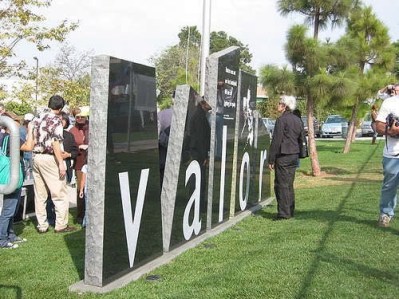
Is Valor For Sale?

valor
Photo by: CheriGaulke


This week ABS-CBN reports something about payment for our Filipino war veterans and it struck me a bit. I’m not an expert nor have I followed every development regarding this issue, however, I’ve heard about it already in the past and I’m troubled every time this news reaches me.

Like every other Filipinos, I knew one person who was a veteran of the World War II—my lolo Jose. When I was a kid, and even until now, the thought of him fighting in the front lines during the war always makes me proud. I used to brag about him while I was in grade school as if I was the only one with a veteran grandfather in the class. That admiration grew more when I became mature enough to understand further what it takes to be in a war, be able to survive it and more importantly, win it. So needless to say, I remember him every time I see living bemedalled veterans on TV.

But despite my compassion for these aged, wrinkled and frail Filipino veterans, whom we all consider as heroes, I always would wonder why others are demanding payment for services during the war. What I find more irritating and disappointing is that some won’t even accept the lump sum coming from the recently approved stimulus plan by the new US President Obama just because they think that they deserve more in the form of a monthly pension. I’ve also read somewhere that the reason why some of our veterans are so intent on being paid is because it was promised to them during the war—thus, they defended the nation and helped the Americans in the process. But isn’t it the same as what mercenaries do? Or isn’t this simply implying that their valor is for sale?

I would like to think that I’m misinformed here, and am willing to stand corrected if someone can shed light why our veterans deserve to be given a pension by the US. But then again I’m just basing my opinion on what I’ve been hearing and reading from the news. So either I’m plainly wrong or some individuals or groups are exploiting our veterans’ situation just to make money out of it. I’m just hoping (and would like to believe) though that what the tri-media are trying to relay here isn’t the collective stand of our beloved lolos (and lolas) who really dedicated their own lives in true service of our country and its allies even without being paid–and that to me is a real hero worth bragging for.

Rest in peace, lolo.

Photo credit: CheriGaulke’s Flickr

***

Mood: 3/10 Honks!

News “On” Paper

Just like almost everyone this year, I too had my own resolutions regarding cutting expenses. I came up with most of these even months before the end of 2008 while some are still in the works as I listen and read thru New Year suggestions that are up to this day is just all around every media – from print, TV, radio and even in homilies during the Sunday masses.

Among the many unwritten resolutions I have is to stop buying newspapers especially during the weekends. I’m thinking that if I do this then I’d spare Php 40 a week multiplied by 52 times a year would give me around Php 2000 savings. Not bad, huh? This amount could make 20 relatives happy by the next Christmas time. Now before you start thinking how a terrible gift giver I am, I’m breaking that resolution anyway.

It really seems I can’t get away with buying these dailies even with the option to read the news online. There’s still something about holding and reading a newspaper while in front of the breakfast table or sofa alongside a perfect breakfast. Having said that,  I won’t go totally paperless any time soon.

What I like about having the real newspaper is that I can go thru any page or section anytime I want to without being under the mercy of my computer’s speed or worse, of my DSL provider’s. I also don’t have to deal with the jerky mouse and monitor glare. There are just some things in this world that new technology can’t beat, for now. Besides, has anyone ever heard of someone getting carpal tunnel syndrome for reading a paper newspaper? Now isn’t that one good reason to spend 20 pesos?

The only problem though with buying a newspaper is that lately, its contents or articles have degraded for my taste. It’s either that there’s really no good news to fill the majority of the pages or there’s really no other news to be printed. Maybe today’s an exception. Today’s edition redeems The Philippine Star.

Expressions peeve

Scott R. Garceau in his regular section, The X-Pat Files, had my heart thumping with anticipation as I read thru his article – Expressions that gotta go this 2009. He listed several words or expressions that he finds irritating and when he mentioned “…it doesn’t take more than a few hours of trawling the blogs to spot ‘em…” it had me thinking if I’d find the same words in my blog. OMG!

One that got my attention was “This 2009 (or Last 2008).” I can’t remember where exactly I’ve read about this but the use of This or Last followed by a date might be indeed wrong. The appropriate word to use would be On like in On Dec 31, 2008. Unfortunately, more people even professional writers still use This or Last. Now, it’s another person (and an American) saying that it’s wrong. So, for me it’s farewell This and Last.

Other words that I totally agree should be scrapped and buried for good are shortcuts such as OMG, WTF and showbiz words such as starrer, comebacking, and guesting. And while I’m at it, I suggest to stop calling our local and old singers Diva – if there are words that trigger my migraine, this is one of them.

Very Guilty

Another remarkable article today is from Nelson T. Dy’s “Guilty As Charged.” This one discussed how criticisms in the workplace should be taken especially if coming from your boss. How can I not relate to it when just a month ago I had several discussions with my manager? Good thing that what Mr. Dy mentioned in his column are what I’ve done so far.

The following are his suggestions on how to make the best out of these criticisms:

Abandon your pride. Instead of becoming defensive, one must be humble enough and think why was he was criticized in the first place.

Adopt a learning attitude. Most people’s tendency especially when new to a working group or a company is try to exude so much confidence as if they knew everything. Often times, this is good as they say that first impressions last. However, on the contrary, I learned that sometimes this is just not the case. Sometimes, it is good to tell upfront any help that you need (from your peers, manager or support group) instead of nodding and making people believe that you know everything. Believe me, it’s based from my own experience.

Assume the best motives from your critic.  Working in a company where every employee is trained to give constructive confrontation, I’ve come to accept feedbacks whatever they may be – well, most of the time. It’s one trait that I’m proud of. But it could have been actually better if these feed- backs were done on time and that’s another story.

Not only that Mr. Dy had me relate his advice to my work, but he had me think twice about my driving. And how was that possible? It’s because his example in assuming the best motives from critics is about driving. He said, “…imagine if you are driving your car in the expressway. Another driver suddenly cuts into your lane. You slam on the brakes and blare your horn. You fume and curse the other driver for being such a reckless idiot. But suppose you discover that he is rushing a loved one to the emergency room of the nearest hospital. I bet your attitude will change.” I’m now reflecting if how I can make some resolutions on the way I drive.

Another good one from Jim

One of the author’s that I regularly read for his thought-provoking articles is Jim Paredes. His article today, In love with books, wouldn’t have made more sense to me had he not mention about his children’s fondness with books and how they got into it from the very beginning.

He wrote about his children being eager readers since they were just kids. Jim said, ”Very early on, even before they were one year old, I made sure that I read books to them at bedtime, or when they were in the proper mood to be quiet and still to just look at the pages and listen to words or even verses of poetry.” Likewise, he quoted literary artist, Emilie Buchwald,“Children are made readers on the laps of their parents.”

All this made me feel that what I’m trying to do every night for our baby boy is after all the path that he would sooner or later thank me for.

Becoming a fan

In my blog, I rarely (or haven’t?) discussed about having some crush or being a fan of a local celebrity. But on the Starweek mag’s cover today is Karylle whom I have to admit has become one of the stars who captured my attention. It must have something to do with my regular viewing of TV patrol which of course includes showbiz news where I saw her featured often. I was never a fan at first as I find her appeal something from the retro era. But it looks like that her smile and face will be regularly seen this year. So when the article mentioned that this singer/actress may indeed be one hot chick to look out for in 2009, I think I would have to agree.

***

Mood: 1/10 Honks! (It’s cold outside but the presence of wife and kid make me warm.) inside.)

In English Please

My recent blogging inactivity did not keep me away from English. Instead, what I lacked in English writing was compensated by opportunities that compelled me to speak the language which I always thought has been my forte. I was wrong. I once again realized that English remains foreign.

When I was in grade school, I was among those who would rather speak than compute if I can avoid it. I was always more comfortable filling pages after pages of theme writing compositions than competing with someone else in the mathematical flash cards race. I did well in English than math. I just love words more than numbers.

It wasn’t surprising then when I jumped into the blogging bandwagon right after I got hold of my own internet connection at home. I dumped my pens and paper journals. And although I only rate myself as among those considered average in terms of English skills, it didn’t deter me to post my entries in the form of blogs. Practice, practice, practice was my mantra.

So just imagine how excited I was when I found a couple of perfect excuses to speak English. First, our son’s arrival meant that my much awaited time to teach English to someone came. And I find it funny that while he’s learning the basics—alphabet, words, and vowels — I on the other hand was silently relearning most of it. I correct myself every time I pronounced a word wrong. Second, l attended a training last week wherein our instructor was Tenora—a black American with a doctorate degree. Obviously in this training, interactions were all in English.

Other than learning how to become a good manager by using the Symphony/Conductor metaphor, I also began to make a conscious effort to get my message across by trying to speak up every time I had the chance. And just as I was persecuting myself for the mispronunciations I regularly had, I was quite surprised when at one point Tenora had to write something on the flip chart and seemed to have doubts whether she’s spelling the words right. Sensing that some of us might be looking at her, she admitted that often times she’d falter when it comes to writing. She even joked that someone once said, “Only a wise person spells one word in different ways.” She’s not sure if it was from Thomas Jefferson. Whoever it was, at that point, I was smiling. Nodding. Well, I can’t be that bad then.

***

One of the newspaper clippings I keep until now is a poem which Philstar’s Mary Ann Quioc Tayag posted on her February 13, 2005 article: So what if my English sounds funny? This one is like a year of speech class com- pressed in one tiny clipping. Here it is:

Hints on pronunciation for foreigners (by TSW) I take it you already know

Of tough and bough and cough and dough? Others may stumble, but not you

On hiccough, thorough, laugh and through? Well done! And now you wish perhaps

To learn of less familiar traps? Beware of heard, a dreadful word

That looks like beard and sounds like bird. And dead: it’s said like bed, not bead

For goodness sake don’t call it deed! Watch out for meat and great and threat,

They rhyme with suite and straight and debt. A moth is not a moth in mother

Nor both in bother, broth in brother And here is not match for there

Nor dear and fear for bear and pear

And then there’s dose and rose and lose

Just look them up – – and goose and choose And cork and work and card and ward

And font and front and word and sword And do and go and thwart and cart Come, come, I’ve hardly made a start! A dreadful language? Man alive,

I’d mastered it when I was five.

***

And here’s a hilarious poem I found while searching related topics:

I have a spelling checker

It came with my PC

It plainly marks for my revue Mistakes I cannot sea

I’ve run this poem threw it I’m sure your please to no, It’s letter perfect in it’s weigh My checker tolled me sew

– anonymous

(Source: http://www.etni.org.il/quotes/spelling.htm)

***

Oh by the way, I also tried searching for Thomas Jefferson’s quote related to spelling and what I find is completely opposite to what Tenora mentioned:

“Take care that you never spell a word wrong.  Always before you write a word, consider how it is spelled, and, if you do not remember, turn to a dictionary. It produces great praise to a lady to spell well.” – Thomas Jefferson, to his daughter Martha.

(Source:      http://www.wisdomquotes.com/cat_spelling.html)

***

Mood: 3/10 Honks! (Wife and baby sleeping)


Calvin and Hobbes is Subliminal

The news I read from the recent Sunday editions of The Philippine Star have been so full of negative items that I’d wonder why I’m still addicted to buying it regularly. Maybe it has something to do with my obsession to write more that I made it already a habit to read, read, and read no matter how unpleasant the news is. And Sundays for me is the perfect time to do just that.

When I feel frustrated or depressed, however, by what I’m reading I immediately scan the newspaper for the comics section. Works all the time as once I’ve set my eyes on it I would spend time reading every strip and shut my mind away from the senseless current events. Sometimes I would even think that the comics section has more depth in it than what they put in the headlines. Ti abi.

Among the comics I’d always read is Calvin and Hobbes. Calvin’s role-playing games or daydreams always fascinate me. I think that his imagination, frustrations, and alibis appear to be the toddler equivalent of mine. I also like how he interacts with Hobbes who in his own world appears alive but in fact is only a tiger plush toy. (Isn’t that schizophrenia, by the way?)


Calvin clip
Oct 26 Philstar C&H strip.


My fascination with this creation by Bill Waterson sticks in my head like some subliminal Rock ‘n Roll message that allegedly dictates an act to its listeners. Proof of this came apparent when I passed by a book fair stall in our company. I was passing time and aimlessly looking at the books when I noticed a familiar cover that’s almost out of my periphery—a Calvin and Hobbes book. It’s a bit old but I got interested in it anyway. And just after a couple of minutes browsing its pages, I bought the book (There’s Treasure Everywhere) on impulse and went away smiling as if I just made a killing from an auction.

And so tonight, it looks like CSI: NY may have to step aside. And maybe I’d try reading the book with Hobbes.


Calvin treasure
I wasn’t drawn towards the title, but I think it’s a bit symbolic.


***

Well, since I’m now talking about the Philippine Star’s recent irritating con- ten, this Sunday’s edition has actually a lot of interesting stuffs that I can’t help but re-read it on Monday and re-read it again today. Here are some of those worth sharing. Of course, let’s start with the good news.

***

A Story from Francis J. Kong’s article, Feeling of Fear:

During Napoleon’s invasion of Russia he was accidentally separated from his men. A group of Russina Cossacks spotted him and began chasing him. Napoleon ran for his life and slipped into a little furrier’s shop on as side alley. Gasping for breath, he saw the furrier and asked the man where he can hide. The furrier pointed him to a pile of furs in one corner. Napoleon immediately crawled into it and the man covered him with more furs.

No sooner had he finished when the Russian Cossacks burst in the door, shouting “Where is he? We saw him come in.” They tore his shop apart, poked the pile with their swords but didn’t find him. Soon, they gave up and left.

Later Napoleon crept out from under the furs, unharmed, just as Napoleon’s personal guards came in the door. The furrier turned to Napoleon and said timidly, “Excuse me for asking this question of such a great man, but what was it like to be under those furs, knowing that the next moment surely be your last?”

Napoleon drew himself up to his full height appearing insulted and angry. “Guards, take this imprudent man out, blindfold him and execute him. I, myself, will personally give the command to fire!”, he ordered.

The guards grabbed the poor furrier, dragged him outside, stood him up against a wall and blindfolded him. The furrier could see nothing, but he could hear the movements of the guards as they slowly shuffled into a line and prepared their rifles, and he could hear the soft ruffling sound of his clothing in the cold wind. He could feel the wind tugging gently at his clothes and chilling his cheeks, and the uncontrollable trembling in his legs. Then he heard Napoleon clear his throat and call out slowly, “Ready…aim…” In that moment, he entertained a feeling that he couldn’t describe welled up in him as tears poured down his cheeks.

After a long period of silence, the furrier heard footsteps approaching him and the blindfold was stripped from his eyes. Still partially blinded by the sudden sunlight, he saw Napoleon’s eyes looking deeply and intently into his own. Then Napoleon said softly, “Now you know.”

***

And here are some interesting tidbits:

*A bust of our national hero – Jose Rizal, in case you forgot – is a shrine somewhere in Juneau, Alaska. It was built in honor of the contributions of Filipinos in that community who in 1904 assisted in the installation of the first telegraph cable linking Juneau and Seattle. (From What I saw in Sarah Palin’s neighborhood by Julie Cabatit-Alegre)

*Richard Gomez is now writing an article (this must be the first as far as I’m concerned) about photography. (From What makes me click by Richard Gomez)

Frankly speaking, he’s got good shots but sadly, this article had a bit of grammatical error. And knowing Lucy Torres as one prolific writer, she must have blurted out some curse in embarrassment after reading that. I’m quite sure though that this is just an editorial fault.


Richard error
Yes, they do make grammatical mistakes.


*From Movie sets of evil, its author Scott R. Garceu, made a good article on instances (or coincidences) when actors and actresses of horror movies got into actual terrifying, if not deadly, incidents in their lives after shooting the film. Some that captured my attention are the cases of Bruce Lee, Jr. and Heath Ledger who both died even before their respective movies were finished. I guess it must have something to do with bad makeups? Hmmm.

Lastly, here is some of the bad news:

*It’s been a number of weeks already that I’ve been trying hard to appreciate the articles of Joey de Leon. I know that he’s an artist-songwriter, singer, painter, etc – like Jim Paredes. I’m therefore expecting to read something worthwhile from his Me, Starzan column. I hate to say this, but it seems like I’m starting to see another Juliana Palermo who wasn’t able to match her perfect curves with her writing style. I think it’s about time the editorial staff of Star convenes to purge more sense from Mr. Joey de Leon. His recent article ”Starzan Punta Ilog, Hugas Itlog!” isn’t just appropriate for Philstar’s niche.

*Whoever wrote “Baby can you drive my car?” which made it to Starweek’s front page – must have been cramming to get one good article that however good or catchy the title is, it fails to expound on the topic. And besides, I find the cover photo confusing versus the title — it shows two motorcycle riders and more motorcycles in the background. I’m starting to suspect that there’s trouble brewing among the Philippine Star’s editorial staff.