

I now consider myself a frequent Call of Duty player. The last time I checked, I had logged over 1,000 hours of playtime—that’s roughly, 42 days.
I started with the simple goal of playing alongside Marcus, but before I knew it, I could survive Wave 30 on most Zombies maps without much difficulty. It was on Liberty Falls map when I realized I had become a capable player.
Call of Duty is an action game with several modes: online multiplayer, campaign, and—what I play the most—Zombies. Years ago, when I first started playing, I only enjoyed the campaign because it fulfilled my desire to play soldier without the dirt, flying bullets, or the real-world consequences of injury or death. I’ve always been fascinated by firearms and the sound they make—only in video games. Call of Duty gives me that satisfaction.
Hours of playtime don’t necessarily mean wasted time. In fact, the game has taught me a few lessons that apply far beyond the screen.

Enjoy the game—and learn.
This is the key to becoming good at anything.
If you think about it, life is a game, and work is one too. The rules are different, but the principle is the same. We learn more effectively when we don’t take everything too seriously. Instead, we should enjoy the challenges, reflect on what happened, and learn from every experience. Those lessons make us stronger. They become our survival skills.
Don’t get cornered.
In Zombies, getting cornered almost always means getting eliminated. The same is true in life.
Awareness is imperative in our daily lives. Whenever things become complicated, always know your exit before it’s too late. Whether it’s your finances, career, or relationships, leave yourself room to maneuver.
Know when to bail out.
Similar to not getting cornered, we must know when to let go of a plan, a relationship, or a business venture if they become too difficult or unrealistic to sustain.
There’s no shame in cutting your losses if it’s the better option. Sometimes surviving is a smarter strategy than stubbornly fighting a losing battle.
Resources are finite, so prioritize your immediate needs.
Decision-making becomes difficult when we’re overwhelmed by options.
In Zombies mode, there are Perk Machines that offer different abilities to enhance your character. My favorite when I was starting was Speed Cola, because it lets me reload my weapons faster. Marcus eventually pointed out that I shouldn’t always choose the same perk. Instead, I should adapt based on what I actually needed.
Some weapons have large magazines, making faster reloads less important. Other times, Deadshot Daiquiri is the better choice because it improves accuracy and helps eliminate more zombies, which means earning more points.
Life works the same way. Money is finite, and so are our time and energy. We can’t have everything at once. We have to prioritize what we need now before spending resources on what merely looks appealing. Needs before wants.
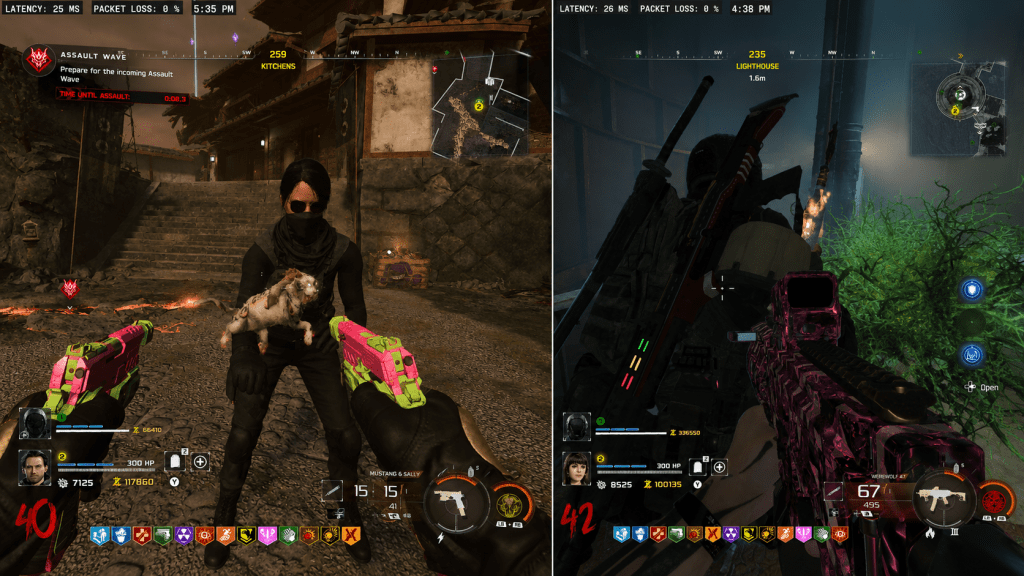
Trust someone. Trust your mentor.
We have to accept that we don’t know everything. No one does.
We all need someone who has already walked the path we’re trying to take. Listen to them.
In Call of Duty—and many other Xbox games—Marcus is my mentor. When he shares an insight or suggests a better strategy, I follow his advice because experience often sees things that enthusiasm misses.
Age doesn’t automatically determine wisdom. Sometimes the younger person has the better idea. Sometimes the older person does. What matters is whether their advice is grounded in experience and results.
Thousand hours, and counting, of playing Call of Duty, I realized that I wasn’t just learning how to survive waves of zombies. I was learning how to think and thrive under pressure, manage limited resources, adapt to changing situations, recognize when to retreat, and trust the people who could help me improve.
Those are lessons worth carrying into real life.

